Your Gateway to Flores' Rich Biodiversity
Herping in Flores: Searching for the Yellow Pit Viper
2 June 2026 347x Trip Report
Herping in Flores: Searching for the Yellow Pit Viper | October 2024
Participants: Josh & partner – 2 pax from Australia
Date: October 25, 2024
Location: Labuan Bajo, West Manggarai Regency – Flores
Target species: yellow Lesser Sunda White-lipped Pitviper Trimeresurus insularis
Introduction
Flores is apart of the Lesser Sunda Islands, famous as the home of the Komodo dragon.
At the westernmost tip of Flores, Labuan Bajo is the main gate to Komodo National Park. Beyond the dragons, the lowland moonson forest around Labuan Bajo are prime nocturnal habitat for rare reptiles and amphibians.
This night herping tour was conducted on Octo 25, 2024. Our main target was the yellow morph of the Lesser Sunda White-lipped Pitviper Trimeresurus insularis – a rare colour variant found only in the dry forest of West Flores, Komodo National Park, and Wetar.
Night Herping in Labuan Bajo, Flores: the sounds of the Forest
The sounds of Tokay Gecko Gekko gecko and Moluccan Scops-Owl Otus magicus accompanied our herping activity that night. We entered through a narrow path commonly used by locals as access in and out of the Labuan Bajo forest. Our flashlight beams swept the forest like nightclub lights—moving back and forth, illuminating every corner and ensuring nothing was missed.
A week earlier, Agus had called me, asking if I would be willing to accompany him and his two guests—Jo and his girlfriend—for a herping trip. Jo had previously visited Labuan Bajo with his colleagues for a similar activity back in 2018. This was his second visit. However, this time his main target was the yellow Lesser Sunda White-lipped Pit Viper Trimeresurus insularis.
Journey to the Herping Site in Labuan Bajo, Flores
We left the hotel at 07. 15 p.m, and rode motorbikes to the herping site, which took about ten minutes. We passed along a partially unpaved road, with dust rising into the air as we rode through. We then entered an outer trail, where parts of the path were already overgrown with various plants and wild vegetation.
“We’ve arrived, Mas,” I said, ending my conversation with Agus. We parked our vehicles and prepared our equipment. It turned out that Agus had been here before during the COVID period, although at that time they had not ventured this far into the area.
First encounter: Banded Wolf Snake Lycodon subcinctus
Not far from the entrance—about 10 meters in—Jo spotted a small Banded Wolf Snake Lycodon subcinctus waiting for its prey. I approached, as it was my first time seeing one, and took several photos to document the encounter. Jo, however, chose not to take out his camera since it wasn’t his target species.
“He’s always like that, Fin. He won’t take photos unless it’s his target species,” Agus remarked after Jo glanced at the snake briefly and then moved on.
I then mentioned that about two meters from that very spot, Niels (a previous herping guest of Flores Nature Tour) and I had found the yellow Lesser Sunda White-lipped Pit Viper a month earlier. Without wasting any time, we immediately searched the surrounding area—but found nothing.
Searching for the Yellow Pit Viper Trimeresurus insularis
The slippery rock surfaces at the herping site forced the four of us to move with extra caution. One wrong step could easily cause a fall and result in serious injury. We continued deeper into the area until Jo finally spotted a green Lesser Sunda White-lipped Pit Viper Trimeresurus insularis resting on a tree branch, waiting for its prey. Nearby, we also encountered a Whip Spider perched on a rock.
The rock walls, resembling uplifted coral formations, were filled with small cavities along the riverbank. Some were adorned with tree roots stretching high above. According to Jo, this area becomes an ideal habitat for Reticulated Python during the rainy season. Read our complete Snake Palace and Reticulated Python in Flores guide here.
We followed the dry riverbed, now without any remaining pools of water. After going quite far, we decided to return to the starting point—the place where our herping journey had begun.
Encounter with the Yellow Pit Viper Trimeresurus insularis
The thumping music from nearby houses seemed to invite us to dance. A few teenagers rode past on motorbikes, their laughter echoing loudly in the night. From morning until afternoon, this path is usually busy with motorcycles, and occasionally cars. But at night, only a few vehicles pass through—perhaps because of the eerie road conditions. Scattered trash was visible everywhere; some carried by rainwater, others deliberately discarded. Jo reassured us that the snake likely hadn’t moved far from where I had previously seen it, as it would seek out the nearest water source.
The cold began to set in, seeping into our skin. Agus moved along the left side of the river, while I took the right. Jo and his girlfriend searched through the middle. About 15 meters from the concrete crossing—the entrance point—Jo called out to us. He had found the yellow Lesser Sunda White-lipped Pit Viper Trimeresurus insularis which had just emerged from a tree hollow to hunt. It was quite large. Jo immediately took out his camera and began photographing it. The joy and excitement on his face were unmistakable. At last, his target species had been found.
Habitat and Behavior of Yellow Pit Viper Trimeresurus insularis
For context, Lesser Sunda White-lipped Pit Viper Trimeresurus insularis is a highly efficient nocturnal predator. Its primary diet consists of rodents, small birds, frogs, and lizards. Its natural habitat includes tropical rainforests, mountainous regions, and dense shrubs across smaller Indonesian islands such as Flores and Komodo National Park. During the day, it typically rests on tree branches or within thick vegetation, blending seamlessly into its surroundings to avoid predators. At night, it becomes active and begins hunting. Heat-sensing pits near its nostrils allow it to detect prey, and it typically uses an ambush strategy—waiting patiently for prey to come within striking distance.
As the night grew deeper, the cold intensified. Time passed quickly, and before we realized it, we had spent three and a half hours at the herping site. We decided to return to the hotel, as the next day they would do live a board for three-day Komodo Herping Tour in Komodo National Park for another target species.
End of Our Night Herping Experience in Labuan Bajo
After dropping them off at the hotel, Agus and I headed to Roxi Mart and bought two cans of cold beer. We drank them while recounting the night’s adventure under the glow of lights beside Meruorah Hotel, accompanied by the shimmering lights of boats docked nearby.
Agus and I shared the same concern about the presence of the yellow Lesser Sunda White-lipped Pit Viper in that area, as its safety could not be guaranteed. Questions surfaced—spoken and unspoken—until we arrived at a quiet conclusion: its survival depends heavily on the people and vehicles passing through that area. It could be run over by a vehicle or killed out of fear.
Then again, perhaps those were just thoughts influenced by the beer we had been drinking.
Want to have same experience yourself?
Join our Labuan Bajo Herping Tour – One Night Adventure to find it with our local guide.
Contact us on WhatsApp for available dates and pricing or email: floresnaturetour@gmail.com for customise itinerary and other wildlife expeditions.
Where Is Labuan Bajo?
Labuan Bajo is located on the western tip of Flores Island and is one of the most visited destinations in East Nusa Tenggara, Indonesia. The town is known for its stunning coastal scenery, spectacular sunsets, and its role as the main gateway to Komodo National Park.
How Many Snake Species Occur in Labuan Bajo?
At least nine snake species have been recorded in the Labuan Bajo area, several of which are endemic to the Lesser Sunda Islands. Notable examples include the Lesser Sunda White-lipped Pit Viper Trimeresurus insularis, Lesser Sunda Cat Snake Boiga hoeseli, Lesser Sunda Rat Snake Coelognathus subradiatus, and Lesser Sunda Bronzeback Dendrelaphis inornatus.
What Is the Best Time for Herping in Labuan Bajo?
The best time for herping in Labuan Bajo is at night, as many reptile and amphibian species are primarily nocturnal. The most favorable period generally runs from March to December, when vegetation is less dense and wildlife is often easier to locate and observe.
Do I Need a Herping Guide in Labuan Bajo?
Yes. Hiring an experienced local herping guide can significantly improve your chances of finding reptiles and amphibians in Labuan Bajo. Local guides are familiar with the best herping locations, species behavior, and seasonal activity patterns. They can also help identify venomous and non-venomous snakes, making your herping experience safer and more productive.
Can I Combine Herping, Birdwatching, and a Komodo Tour in Labuan Bajo?
Yes, absolutely. Herping can easily be combined with birdwatching and visits to Komodo National Park. This combination allows visitors to experience a wider range of Flores’ biodiversity, from endemic birds and reptiles to the iconic Komodo dragon, creating a more rewarding wildlife adventure and expeditions.
Is the Yellow Pit Viper Trimeresurus insularis Dangerous?
Yes. The Yellow Lesser Sunda White-lipped Pit Viper Trimeresurus insularis is a venomous snake that occurs in Flores, Komodo National Park, and other Lesser Sunda Islands. Its venom can cause significant pain, swelling, and tissue damage. Because it relies on camouflage and an ambush hunting strategy, people may accidentally approach it without noticing its presence.
Maybe you are interested in reading the following article:

Komodo Wildlife Tour: Fulfilling a 70-Year Dream
January Rain in Labuan Bajo January rain blanketed Labuan Bajo as Kathy began her long journey to the home of Komodo Dragons. The west monsoon winds brought high waves and grey skies in the early days of 2025. But for Kathy, the weather was no obstacle. At seventy years old, she was finally just one... read more
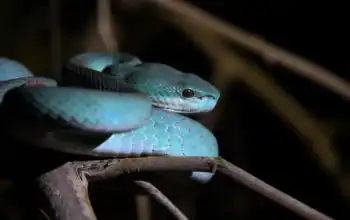
Komodo Herping Tour Report: Blue Pit Viper, Timor Python & Komodo Dragons Expedition
Komodo Herping Tour Report: Blue Pit Viper, Timor Python & Komodo Dragons Expedition | July 2026 Participants: Eunice – 1 pax from United States Tour Leader: Afin Gagu Date: July 12 -14, 2026 Location: Komodo National Park – East Nusa Tenggara Target Species: Blue morph Pit Viper Trimeresurus insularis, Timor Python Malayopython timorensis, K... read more
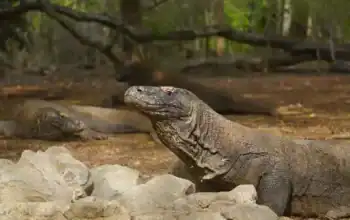
Komodo Dragons
Komodo Dragons We believe every journey should be more than just a trip — it should be a meaningful encounter with nature. The magic power of Komodo dragons offers a rare opportunity to meet this world’s last prehistoric giant lizard in its natural habitat. Stepping onto Komodo island on our Komodo wildlife tour experience feels... read more
Contact Us
If you have any questions, please contact us.
-
Hotline
+6282147315739 -
Whatsapp
+6282147315739 -
Email
floresnaturetour@gmail.com


No comment yet