Your Gateway to Flores' Rich Biodiversity
Komodo Herping Tour Report: Blue Pit Viper, Timor Python & Komodo Dragons Expedition | July 2026
Participants: Eunice – 1 pax from United States
Tour Leader: Afin Gagu
Date: July 12 -14, 2026
Location: Komodo National Park – East Nusa Tenggara
Target Species: Blue morph Pit Viper Trimeresurus insularis, Timor Python Malayopython timorensis, Komodo dragon Varanus komodoensis
Introduction
Most visitors travel to Komodo National Park hoping to see the legendary Komodo Dragon, the world’s largest living lizard. However, beyond these prehistoric giants lies another extraordinary side of the park—one that remains largely unknown to most travelers.
Recognized as a UNESCO World Heritage Site, Komodo National Park is an exceptional destination for reptile enthusiasts. Its dry monsoon forests, rolling savannas, rocky hills, and coastal ecosystems provide suitable habitats for a remarkable diversity of reptiles and other wildlife, including several reptiles endemic to the Lesser Sunda Islands.
Among the park’s most coveted herping highlights are the spectacular blue morph of Lesser Sunda White-lipped Pit Viper Trimeresurus insularis and the elusive Timor Python Malayopython timoriensis, two endemic reptiles of the Lesser Sunda Islands that attract wildlife photographers and herpers from across the globe.
This trip report follows our three-day Komodo Herping Tour in Komodo National Park, searching for Blue Pit Viper, Timor Python, Komodo Dragons and many other fascinating wildlife species in their natural habitat in from 12th July until 14th July 2026.
Day 1: July 12th, 2026
Searching for the Blue Pit Viper on Padar Island, Komodo National Park
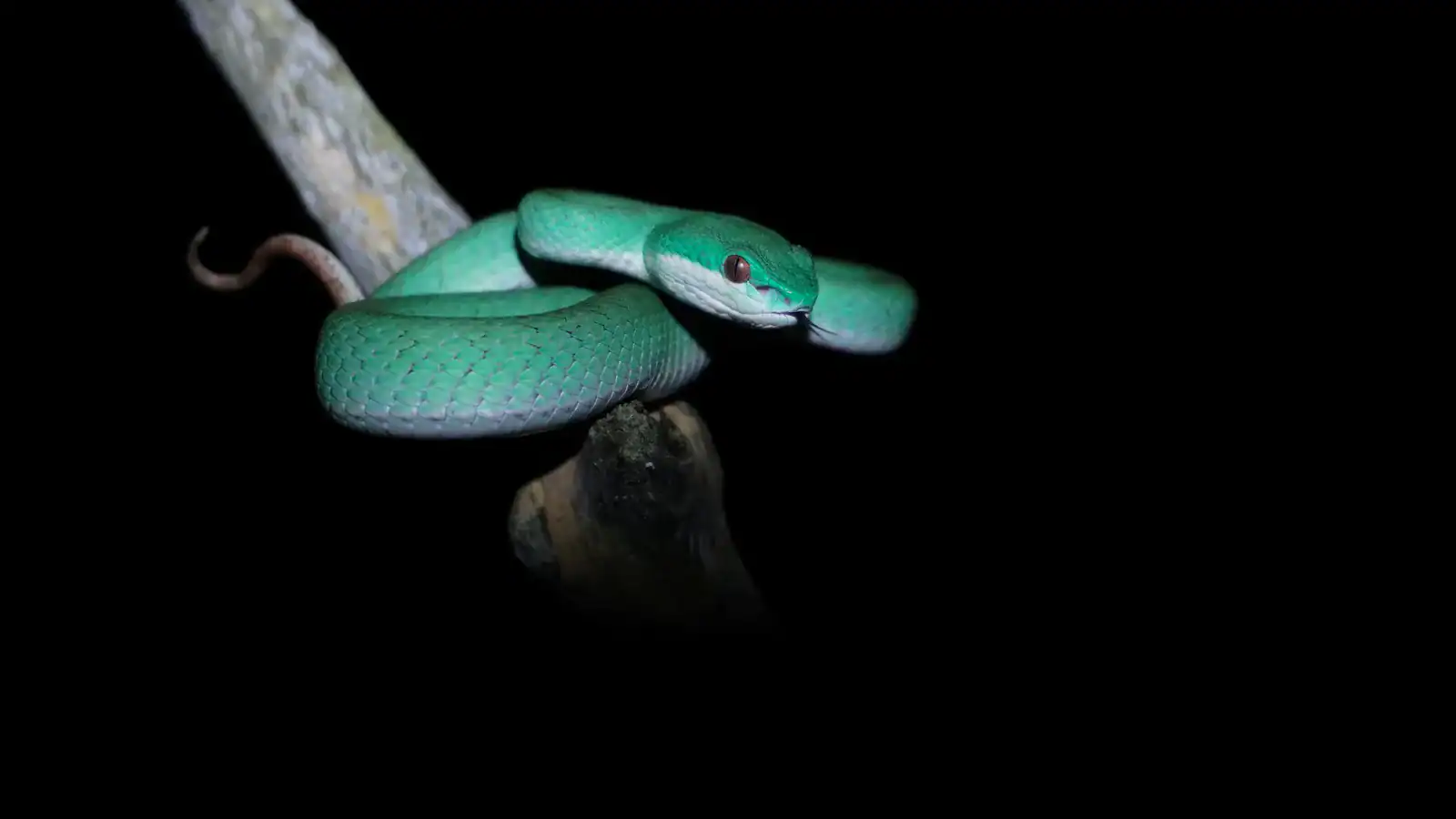
Blue Lessr Sunda White-lipped Pit Viper in Padar Island – Flores Nature Tour
Our three-day herping adventure began in Labuan Bajo, where we boarded a traditional wooden boat bound for the islands of Komodo National Park. Joining me on this expedition was Eunice, a solo traveler from the United States with a keen interest in reptiles and wildlife. After a short briefing about the itinerary, the captain started the engine, and we slowly left the harbor behind, setting course for one of Indonesia’s most extraordinary wildlife destinations.
Our first stop was Padar Island, approximately three and a half hours away. As we cruised across the Flores Sea, strong tidal currents occasionally forced the boat’s engine to work at full power, sending clouds of dark smoke into the air and reminding us that navigating these waters requires both experience and patience.
The third-largest island in Komodo National Park, after Komodo and Rinca, Padar is best known for its spectacular scenery. Rolling volcanic hills, sweeping savannas, and dramatic coastlines have made it one of Indonesia’s most photographed landscapes. The island is particularly famous for its panoramic viewpoint overlooking three crescent-shaped bays with white, black, and pink sand beaches—a landscape that helped earn Padar recognition as one of Time Out’s Best Places to Visit in 2025.
For us, however, Padar offered far more than breathtaking views. Its dry coastal scrub and rocky hillsides provide ideal habitat for the blue morph of Lesser Sunda White-lipped Pit Viper Trimeresurus insularis, one of the region’s most iconic reptiles. Among its various color forms, the striking blue morph has become a dream species for herpers and wildlife photographers from around the world. Finding one was our primary objective for the first night.
Shortly after dinner, at exactly 7:05 PM, we stepped ashore and began searching the coastal vegetation. Our luck came almost immediately. Less than a minute into the search, we spotted a medium-sized female Blue Pit Viper resting motionless among the branches, perfectly camouflaged as she waited in ambush for unsuspecting prey.
Rather than rushing on, we spent nearly two hours observing and photographing the snake from different angles while appreciating its calm behavior and remarkable coloration. Encounters like this are exactly what make night herping in Komodo National Park so rewarding.
As the night progressed, our success continued. We located three more Trimeresurus insularis, although these individuals displayed the species’ more common vivid green coloration instead of blue. Unlike the first snake, they were noticeably more active, moving slowly through the vegetation in search of prey.
Finding four pit vipers on our very first night exceeded all expectations and provided the perfect start to our Komodo Herping Tour. Satisfied with an unforgettable evening in the field, we returned to the boat to rest and prepare for another day of wildlife exploration.
Day 2: July 13th, 2026
Searching for Komodo Dragons and the Timor Python In Komodo National Park
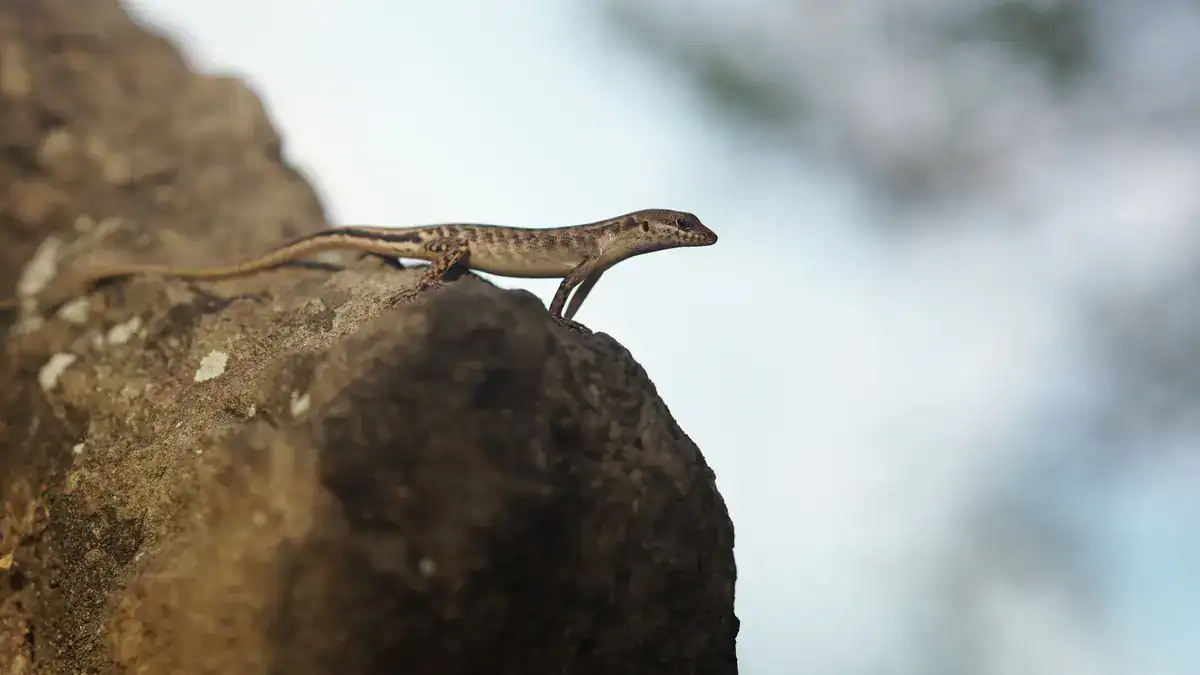
The Lesser Sunda Dark-throated Skink, a small endemic reptile found on Padar Island, Komodo National Park.
We were on our feet before dawn. At 5:05 AM, we began the short climb to Padar Island’s famous viewpoint, hoping to witness one of the most spectacular sunrises in Indonesia. Although the ascent took only about ten minutes, we moved slowly, scanning the rocky trail and surrounding vegetation for reptiles that might still be active in the cool morning air.
Even before reaching the summit, the island rewarded us with two reptile sightings: a Common House Gecko Hemidactylus frenatus and Lesser Sunda Dark-throated Skink Sphenomorphus melanopogon. As the first rays of sunlight illuminated Padar’s rolling hills and the island’s iconic three-colored bays, we paused to enjoy one of Komodo National Park’s most unforgettable landscapes before continuing our wildlife expedition.
Our next destination was Komodo Island, home to the world’s largest living lizard—the legendary Komodo Dragon Varanus komodoensis.
Shortly after arriving at Loh Liang, one of the island’s two main visitor gateways alongside Komodo Village, we were welcomed by a young Komodo Dragon estimated to be around seven years old. The animal was calmly investigating the area around a local resident’s tent, apparently following an intriguing scent. After a brief safety briefing from our local ranger, we set off along the Medium Trek.
The trail wound through a forest dominated by tamarind trees, one of the dragon’s most important hunting habitats. During the long dry season, this area retains valuable sources of water that attract Timor Deer Rusa timorensis and other prey species such as Wild Boar Sus scrofa, making it an ideal place to search for Komodo Dragons. It wasn’t long before we encountered another young dragon moving confidently through the undergrowth. Nearby, several Timor deer grazed cautiously while Green Junglefowl Gallus varius foraged beneath the trees.
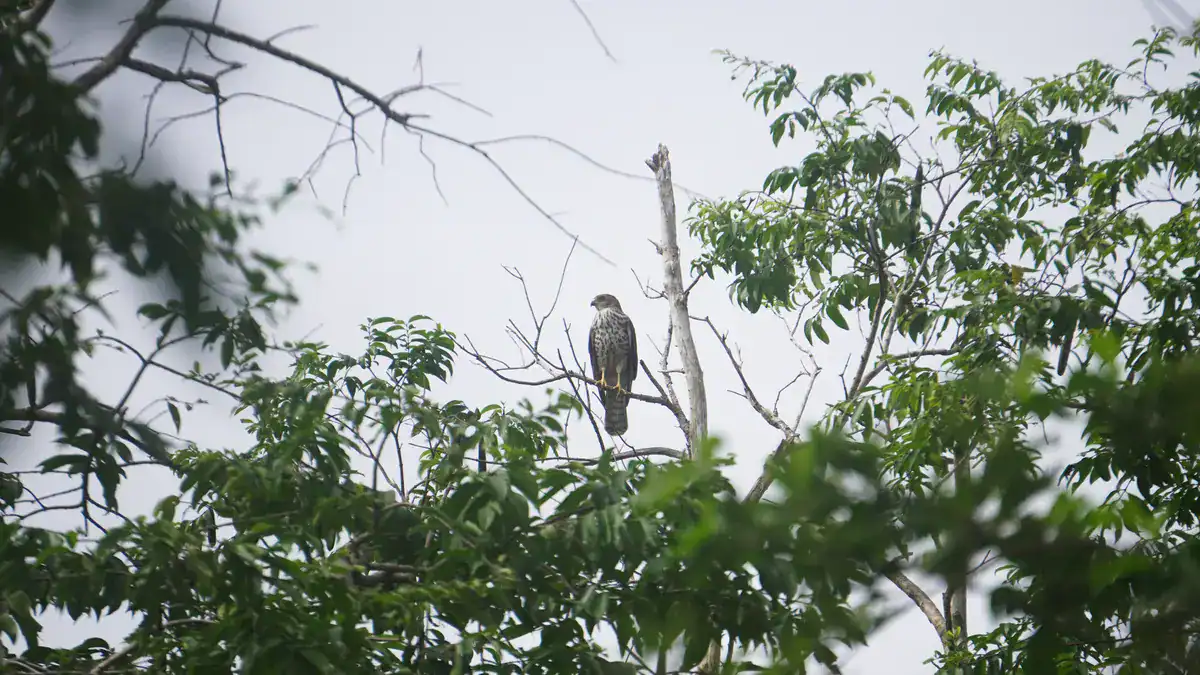
Variable Goshawk (Accipiter hiogaster) perched near the Komodo Dragon trekking trail in the tamarind tree at Loh Liang, Komodo Island. One of 8 bird species recorded during our July 2026 trip.
At the junction where the Medium Trek meets the Long Trek, several local guides shared exciting news: two Komodo Dragons had just been spotted farther along the Long Trek route. Without hesitation, we adjusted our plans and headed in that direction. The dragons were eventually found resting beneath dense shrubs, sheltering from the increasingly intense tropical sun. Although the thick vegetation made photography challenging, simply observing these prehistoric reptiles in their natural habitat was well worth the detour.
Our return journey proved equally rewarding. Two more Komodo Dragons were resting near the beach, offering Eunice excellent opportunities to photograph them in much better light and at closer range.
Birdlife throughout the morning was equally impressive. Among the species we recorded were five Pied Imperial-Pigeon Ducula bicolor, three Green Imperial-Pigeon Ducula aenea, an Orange-footed Megapode Megapodius reinwardt, a Collared kingfisher Todiramphus chloris, a Large-billed Crow Corvus macrorhynchos, Variable Goshawk Accipiter hiogaster, and an Ornate Sunbird Cinnyris ornatus. These 8 bird species are commonly recorded on our Flores Birding Tour, which can be combine with Komodo Dragon trekking at Loh Liang.
Leaving Komodo Island behind, we made a brief stop at the famous Pink Beach. With its crystal-clear turquoise water and soft pink sand, it was the perfect place to relax for an hour, enjoy a refreshing swim, and recharge before the next stage of our adventure.
By late afternoon, we arrived at Rinca Village, one of only three communities located within Komodo National Park. Home to approximately 2,000 residents, most of who depend on fishing for their livelihood, the village offers a fascinating glimpse into everyday life inside the park. We spent some time walking through the settlement, observing local activities while remaining alert for Komodo Dragons, which occasionally wander through the village in search of food.
Birdwatching around the village produced several notable sightings, including the Critically Endangered Yellow-crested Cockatoo Cacatua sulphurea, Brahminy Kite Haliastur indus, Spotted Dove Spilopelia chinensis, and Barred Dove Geopelia maugeus.
As sunset approached, we sailed to nearby Koabe Island known as Kalong Island, known for its large colony of Large Flying Fox Pteropus vampyrus. Watching tens of thousands of giant fruit bats stream into the evening sky as the sun disappeared below the horizon was one of the day’s most memorable spectacles.
After dinner at 7:30 PM, it was time for our second night herping expedition. Our destination was Bat Cave, where we hoped to find one of the Lesser Sunda Islands’ most elusive reptiles—the Timor Python Malayopython timoriensis. Accompanied by Gunardi, a Komodo National Park ranger, we carefully searched the rocky slopes, cave entrance, and surrounding vegetation.
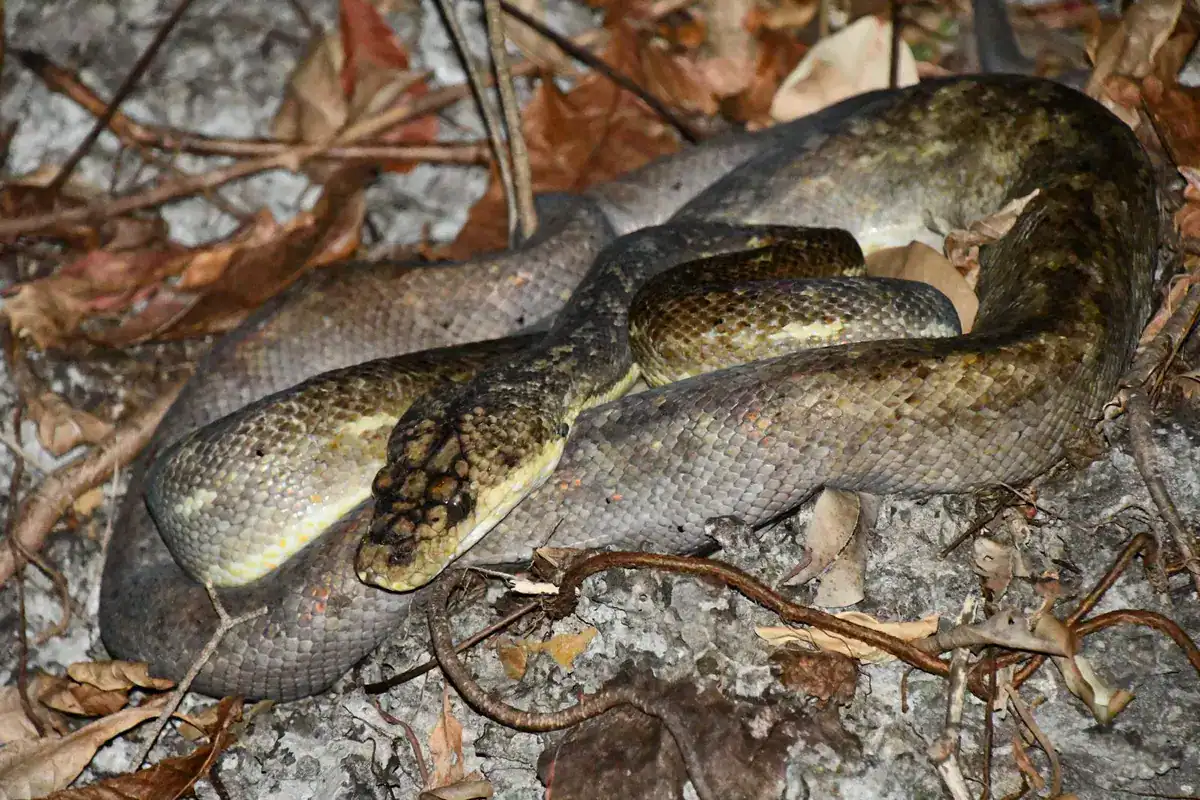
A Timor Python waiting for its prey on a slope of rocky floor at the Bat Cave in Rinca Island, part of Komodo National Park in East Nusa Tenggara, Indonesia.
For nearly ninety minutes, the forest remained quiet. Then, at exactly 9:30 PM, our persistence was finally rewarded. Just outside the cave entrance, a beautiful Timor Python emerged from among the limestone rocks, likely having just left one of the narrow crevices hidden within the hillside. As one of the Lesser Sunda Islands’ endemic reptiles, this species is considered a dream encounter for herpers and wildlife photographers alike, making the discovery especially rewarding.
The night produced several additional highlights. We encountered Darmandville’s Bent-toed Gecko Cyrtodactylus darmandvillei clinging to the limestone walls, along with the remarkable Exiles Tailless Whip Scorpion Phrynus exsul, an unusual arachnid rarely noticed by casual visitors.
Even as we made our way back to the boat, the surprises continued. Beneath an abandoned wooden fishing boat resting on the shoreline, we discovered a Dog-faced Water Snake Cerberus schneiderii actively hunting in the shallow tidal pools. Nearby, a Tokay Gecko Gekko gecko waited motionlessly on the wall of the village school, perfectly positioned to ambush passing insects.
Four us, the second day was a reminder thta herping in Komodo National Park is not about finding a target species. Every stop-from the forest around Loh Liang to the rocks around Bat Cave-produced something unexpected.
Day 3: July 14th, 2026
Adventure Trek on Rinca Island, Komodo National Park
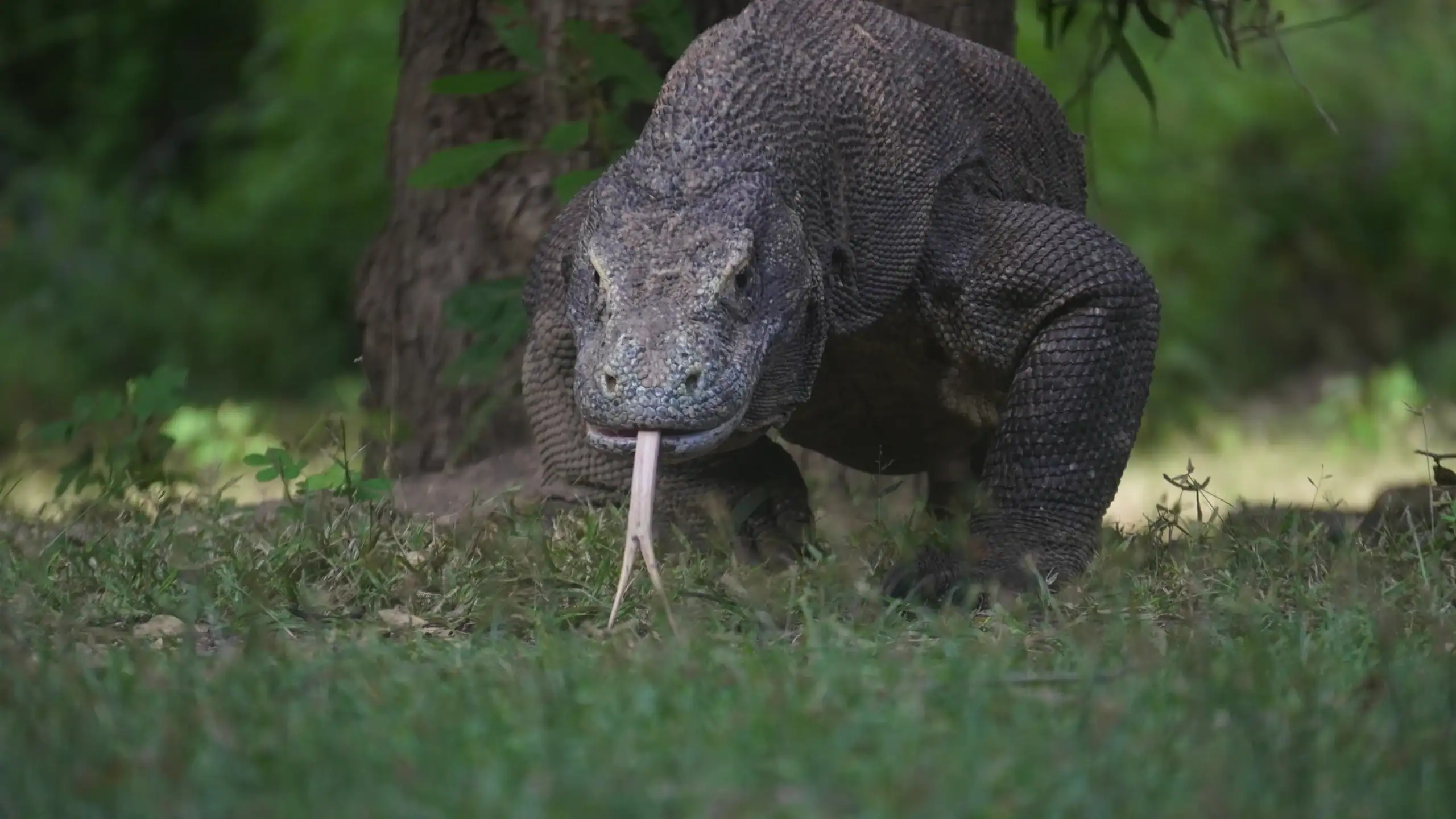
Komodo Dragon (varanus komodoensis) in Rinca Island, Komodo National Park – Indonesia
Our final day in Komodo National Park began with one last opportunity to search for the park’s most iconic resident. To maximize our chances of encountering more Komodo Dragons, we joined the Adventure Trek on Rinca Island. The island is one of the best-known places in Komodo Natioanl Park for wildlife watching and observing Komodo Dragons.
After breakfast, we stepped ashore at 7:05 AM and made our way to the visitor center, where the day’s trek would begin. Even before reaching the trailhead, the island offered an exciting welcome. From the elevated wooden boardwalk overlooking an abandoned salt pond, we spotted a large male Komodo Dragon basking in the early morning sunshine, conserving energy before the day’s temperatures began to rise.
With visitor numbers already increasing, we joined three other guests on the same trekking route. Following a brief safety briefing from Mu’is, one of the park’s experienced naturalist guides, we entered the forest. It took only a few minutes before two Komodo Dragons appeared near the beginning of the trail, a reminder of just how healthy the population remains on Rinca Island.
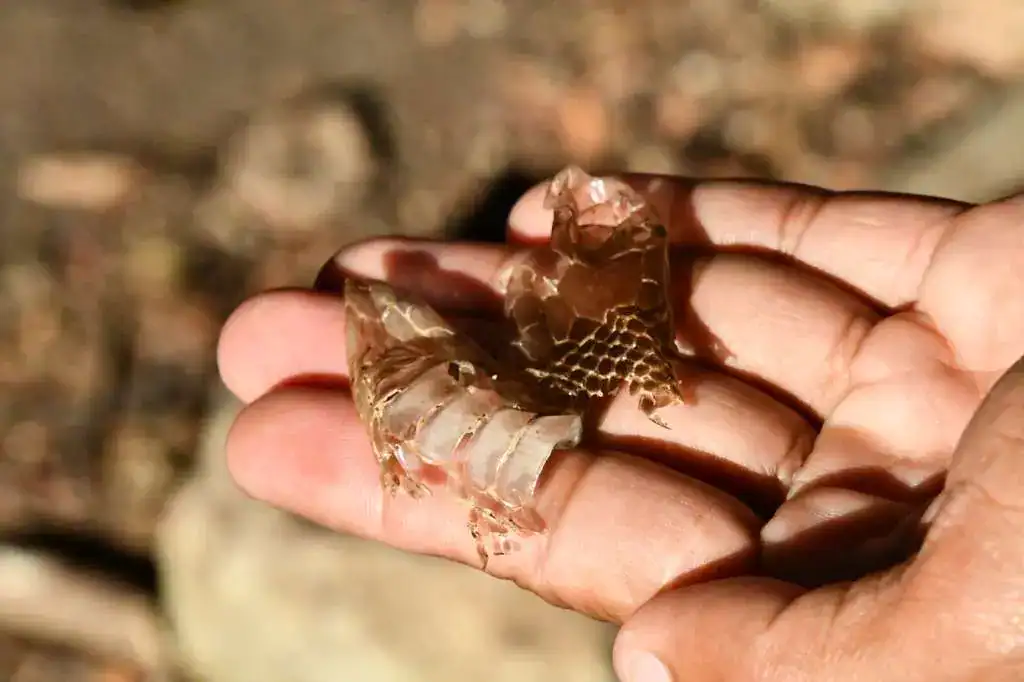
Shed skin of a Javan Spitting Cobra found on Rinca Island, Komodo Natioanl park, Indonesia.
Roughly 500 meters into the hike, we came across an old shed skin of a Javan Spitting Cobra Naja sputatrix, evidence that another impressive reptile had recently passed through the area. Although the snake itself remained hidden, discoveries like this highlight the remarkable reptile diversity found within Komodo National Park.
The trail continued through open lontar palm woodland, across shallow streams that still retained water from the rainy season, and past several natural springs that serve as vital water sources throughout the long dry months. These scattered waterholes attract a wide variety of wildlife, making them some of the most productive areas for animal observation.
Upon reaching Wae Waso, one of the Komodo Dragon’s most important hunting grounds, we paused briefly to rest before continuing into the island’s vast open savanna.
By now, the tropical sun was already intense, and the grasslands shimmered beneath the rising heat. Then, without warning, one of the day’s most memorable moments unfolded before us. A massive male Komodo Dragon emerged from the surrounding shrubs and strode confidently across the savanna, completely unbothered by our presence. Everyone instinctively stopped walking, cameras were raised, and for several unforgettable minutes we watched one of the world’s most extraordinary predators moving through its natural habitat.
The wildlife encounters continued throughout the remainder of the trek. We observed three Water Buffalo Bubalus bubalis grazing near a dry riverbed, a Timor Deer Rusa timorensis standing quietly beside a ranger post, and a young Komodo Dragon marked with the letter “A” as part of the park’s long-term monitoring and research program.
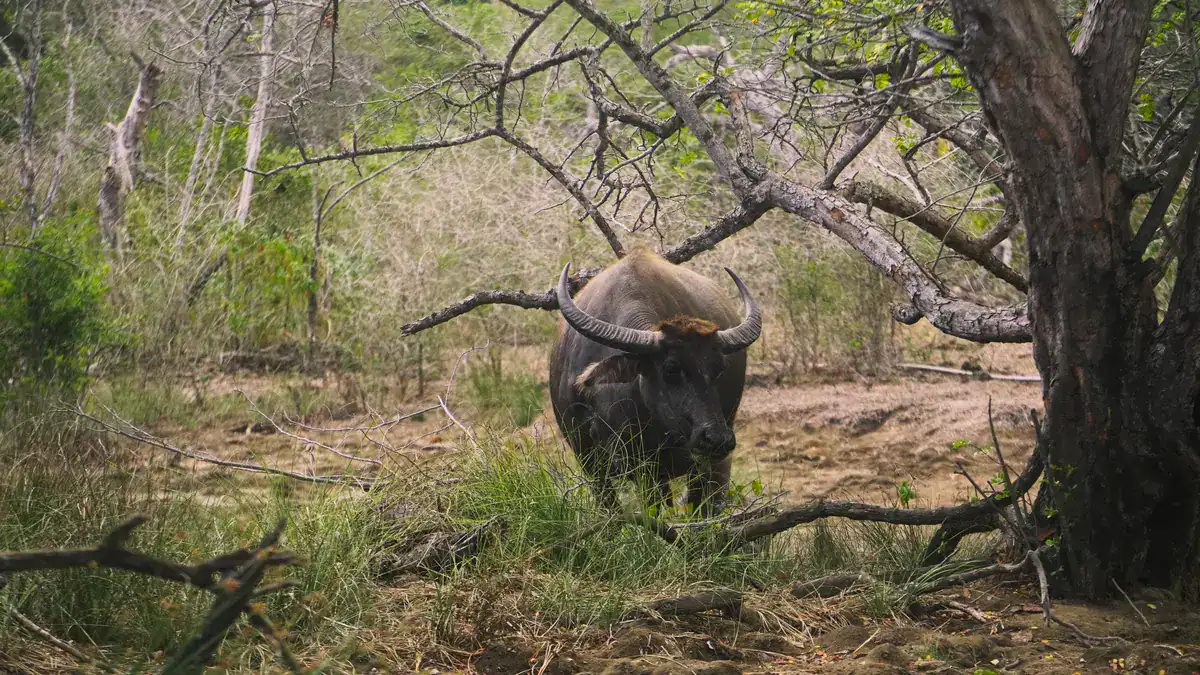
A Water Buffalo in its natural habitat on Rinca Island, part of Komodo National Park, East Nusa Tenggara, Indonesia.
Birdlife added another rewarding dimension to the morning. Among the species recorded were Pacific Reef-Heron Egretta sacra, Flame-breasted Sunbird Cinnyris solaris, Ornate Sunbird Cinnyris ornatus, Sunda Teal Anas gibberifrons, Pied Bushchat Saxicola caprata, Asian Tit Parus cinereus, Barred Dove Geopelia maugeus, Tenggara Whistler Pachycephala calliope, and Variable Goshawk Tachyspiza hiogaster.
By the end of the trek, we had encountered an impressive variety of reptiles, birds, and mammals, once again illustrating the extraordinary biodiversity supported by the unique ecosystems of Komodo National Park. While the Komodo Dragon may be the park’s undisputed flagship species, it is only one part of a much richer natural heritage that continues to fascinate wildlife enthusiasts from around the world.
Before returning to Labuan Bajo, we made one final stop at Kelor Island. The crystal-clear turquoise water, pristine coral reefs, and breathtaking coastal scenery provided a fitting conclusion to our three-day expedition. As we relaxed on the beach, several juvenile blacktip reef sharks cruised through the shallow water, offering one last wildlife encounter before our journey came to an end.
Our three-day Komodo Herping Tour had exceeded every expectation. From finding the spectacular blue morph of Lesser Sunda White-lipped Pit Viper on Padar Island and the elusive Timor Pythonat Bat Cave to observing numerous Komodo Dragons, endemic birds, and other remarkable wildlife, the expedition showcased the incredible biodiversity that makes Komodo National Park one of the world’s finest destinations for herping, wildlife photography, and nature travel.
Final Thoughts
Over the course of three unforgettable days, our Komodo Herping Tour exceeded every expectation. From discovering the spectacular blue morph of Lesser Sunda White-lipped Pit Viper on Padar Island and tracking down the elusive Timor Python at Bat Cave to observing numerous Komodo Dragons across Komodo and Rinca Islands, each day brought new wildlife encounters and memorable moments in the field.
Beyond its world-famous dragons, Komodo National Park revealed itself as one of Southeast Asia’s most remarkable wildlife destinations. Its diverse mosaic of dry monsoon forests, open savannas, rugged hills, mangrove forests, and coastal ecosystems supports an extraordinary variety of reptiles, birds, mammals, and marine life, many of which are found nowhere else on Earth. For herpers, wildlife photographers, birdwatchers, and nature enthusiasts alike, few places in Indonesia offer such an exceptional diversity of species within a single protected area.
Our journey came to a fitting close with a visit to Kelor Island. Surrounded by crystal-clear turquoise waters and breathtaking coastal scenery, we spent our final hours reflecting on an extraordinary expedition while watching several juvenile blacktip reef sharks glide through the shallow reef—one last reminder of the incredible biodiversity that defines Komodo National Park.
Whether your goal is to photograph the legendary Komodo Dragon, search for the striking Lesser Sunda White-lipped Pit Viper and the elusive Timor Python, or simply experience one of Indonesia’s most spectacular natural landscapes, Komodo National Park offers a wildlife adventure unlike any other. For anyone passionate about nature, herping, or wildlife photography, this extraordinary corner of the Lesser Sunda Islands is a destination that deserves a place at the top of the bucket list.
Interested to have the same experience?
Join our Komodo Herping Tour – three-day adventure to explore and discover reptiles in Komodo National Park with a local guide.
Contact us on WhatsApp for available dates and pricing or by email: floresnaturetour@gmail.com for customize itinerary and other wildlife expeditions.
Maybe you are interested in reading the following article:
Labuan Bajo Herping Tour Report: Unexpected Encounter with a Lesser Sunda Cat Snake
Labuan Bajo Herping Tour Report: Unexpected Encounter with a Lesser Sunda Cat Snake | August 2026 Participants: Ahmad and Nesa – 2 pax from Australia Date: August 28, 2026 Location: Labuan Bajo, West Manggarai Regency – Flores Target specises: Lesser Sunda Cat Snake Boiga hoeseli – unexpected find Introduction Labuan Bajo, one of the main..... read more

Komodo Wildlife Tour: Fulfilling a 70-Year Dream
January Rain in Labuan Bajo January rain blanketed Labuan Bajo as Kathy began her long journey to the home of Komodo Dragons. The west monsoon winds brought high waves and grey skies in the early days of 2025. But for Kathy, the weather was no obstacle. At seventy years old, she was finally just one... read more
Birding in Flores: Top 5 Locations for Endemic Birds
Birding in Flores: Top 5 Locations for Endemic Birds Flores Island in East Nusa Tenggara, Indonesia, is one of the best destinations for birdwatching and endemic birds in Wallacea. The island’s rich natural heritage, diverse landscapes, and vibrant culture attract visitors from around the world. In addition to its famous scenery and wildlife, Flores is... read more
Contact Us
If you have any questions, please contact us.
-
Hotline
+6282147315739 -
Whatsapp
+6282147315739 -
Email
floresnaturetour@gmail.com


No comment yet